
In small towns, B2B sales don’t work because of one big campaign or a flashy promotion. It works because your store is everywhere your contractors already are — job sites, inboxes, checkout counters, community conversations, and local events.
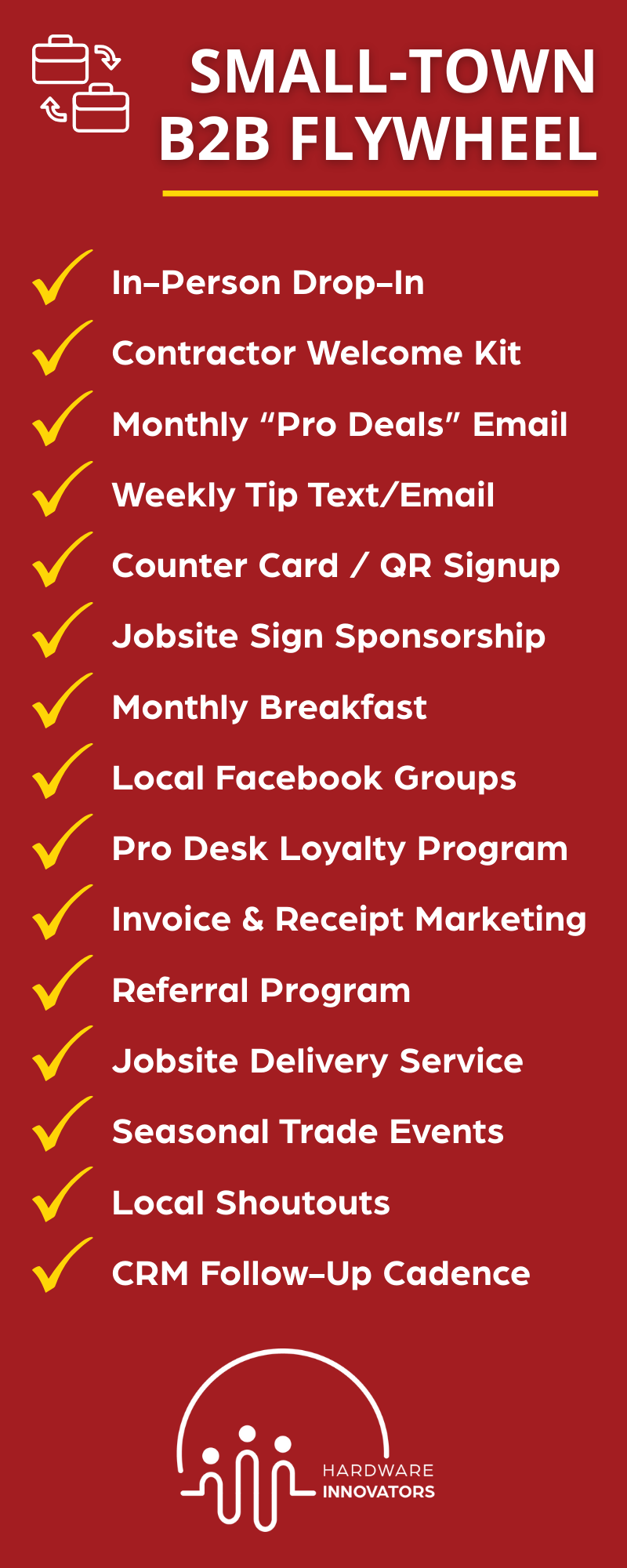
Inside the Hardware Innovators community, we’re constantly talking about how the most successful B2B programs aren’t built on cold calls alone. They’re built on consistent, intentional touchpoints that compound over time. To make this tangible, we put together the example below: a Small-Town B2B “Omnipresence” Flywheel.
This is not a one-size-fits-all checklist. It’s an example framework B2B reps and store leaders can customize based on their team size, market, and strengths. Use what fits. Adjust what doesn’t.
The goal is simple:
Make your store the obvious default supplier for every local trade.
1. In-Person Drop-In
- Owner or sales rep visits job sites, offices, shops
- Bring: coffee, donuts, or a simple leave-behind
- Script: “We’re local, we stock what you actually need, and we want to earn your business.”
2. Contractor Welcome Kit
Hand-delivered or mailed:
- Line card of top SKUs
- Account application
- Dedicated rep contact
- Monthly pro specials flyer
- Store map (pro desk, bulk, deliveries)
3. Monthly “Pro Deals” Email
- Top 5 products
- Limited-time pricing
- Vendor rebates
- New product highlights
Keep it short, visual, and skimmable.
4. Weekly “2-Minute Tip” Text or Email
Examples:
- How to save 20% on fasteners
- New tool demo video
- Upcoming weather alerts
- Local job opportunities
This builds habit + trust.
5. Counter Card / QR Signup
At checkout: “Contractor pricing + text deals → Scan here”
Every walk-in is a lead.
6. Jobsite Sign Sponsorship
- Small “Materials provided by [Your Store]” sign
- On fences, remodels, & new builds
- QR code → B2B account page
This creates peer social proof.
7. Monthly Contractor Breakfast
- 7:00–8:00 am
- Free coffee, burritos, etc.
- 10-minute product demo
- New vendor promo
Your store becomes a meeting place.
8. Local Facebook Group Presence
Post in:
- Contractor groups
- Buy/sell groups
- Small business groups
Content:
- Tool tips
- Weather alerts
- Supply shortages
- Job opportunities
9. Pro Desk Loyalty Program
- Points per dollar
- Rebates
- Quarterly bonus days
- Free rentals or gear
Tie them to you, not just price.
10. Invoice & Receipt Marketing
Every invoice includes:
- Next month’s pro specials
- Account rep info
- QR to reorder list
11. Referral Program
Example pitch: “Bring another contractor → you both get $50 store credit.”
Make your best customers your sales force.
12. Jobsite Delivery Service
Promote:
- Same-day
- Next-day
- Emergency runs
Speed is often worth more than price.
13. Seasonal Trade Events
- Snow prep
- Spring build kickoff
- Fall maintenance
- Storm recovery kits
Invite by email, text, & flyer.
14. Local Radio or Newspaper Shoutouts
Short features:
- Contractor of the month
- Local project spotlight
- New store services
You become part of the local trade story.
15. CRM Follow-Up Cadence
Every new B2B lead gets:
- Day 1: thank you
- Day 7: pro specials
- Day 30: personal call
- Day 60: event invite
- Day 90: loyalty offer
This turns names into accounts.
Why this Works (and Why it Compounds)
None of these touchpoints are groundbreaking on their own. The power comes from layering them together so contractors see your store everywhere they already operate — online, in person, and through their peers.
Over time, the flywheel starts to spin:
- Familiarity builds trust
- Trust builds preference
- Preference builds repeat business
- Repeat business fuels referrals
That’s how your store becomes the default without racing to the bottom on price.
Make This Your Own
If you’re a B2B rep or store leader reading this, don’t aim for perfection. Aim for consistency.
Pick 4–6 touchpoints you can execute well with your current team. Document them. Run them for 90 days. Then layer in more as capacity grows.
Inside Hardware Innovators, this is exactly the kind of framework we workshop together. We share what’s working, what’s stalling, and how to adapt ideas to different markets.
Because in small-town B2B, omnipresence isn’t about being loud.
It’s about being reliably there every time it matters.