
Every month, hardware store owners, marketers, and B2B leaders get together to compare notes on what’s actually happening in their stores, real conversations about what’s working, what’s not, and what’s worth trying next.
This month, a few clear themes started to emerge. The stores seeing momentum aren’t doing more. They’re doing the right things more consistently. Showing up in search when it matters. Having better conversations in-store. Letting go of perfect marketing in favor of what actually gets attention. And focusing on the handful of numbers and habits that move the business forward.
It’s not complicated. But it does require intention.
Let’s break down the key takeaways from each group.
Table of Contents:
B2B Mastermind Takeaways:
Takeaway #1: Having Real Products Listed on Your Site Will Help You Capture Organic Google Searches
One of the simplest but most overlooked wins this month came from just having the right products visible online.
An innovator shared that they sold a $1,200 paint sprayer because it was listed on their website through Ace’s dropship system. A customer searched for that exact product on Google, saw that their store had it, and bought it.
On the flip side, they also called out the frustration when products aren’t listed online. Even if the store can get it, if it doesn’t show up in search, the opportunity is missed or harder to explain to the customer.
The takeaway is simple:
If your products aren’t visible online, you’re invisible when customers are actively searching. And in B2B, those searches are often high intent.
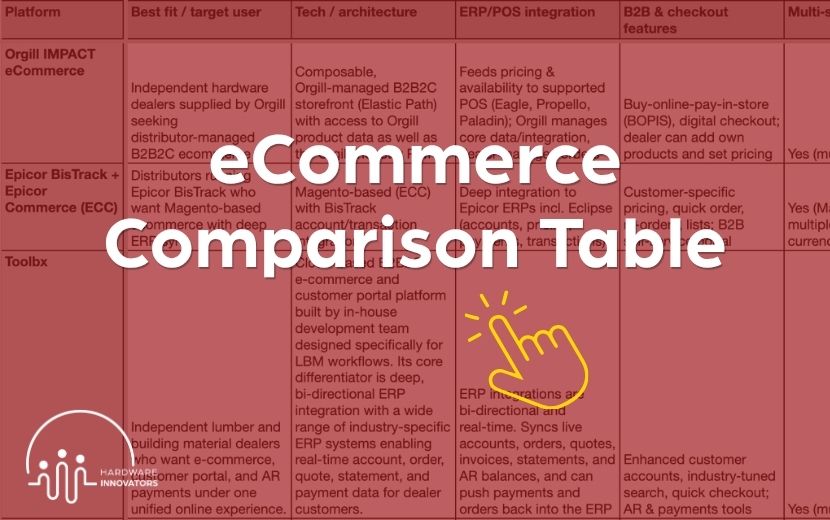
If you are an independent retailer considering setting up eCommerce, check out our comprehensive platform comparison here.
Takeaway #2: The Power of Tapping in at the Register as a B2B Rep
One of the biggest drivers of B2B growth wasn’t a tool, a platform, or a strategy. It was where the rep chose to stand.
An innovator shared that regularly jumping on the register helped them meet more B2B customers than being on the sales floor alone. Every customer funnels through checkout, which makes it one of the highest-volume touchpoints in the store.
That visibility also built stronger relationships internally. By helping cashiers and staying involved in day-to-day operations, they naturally became the go-to person for B2B leads. In some cases, coworkers were actively sending opportunities their way because the trust was built by the B2B lead doing what they do, and even being incentivized with small rewards like gift cards.
The result? More conversations, more leads, and more sales without adding new tools or processes.
Sometimes the best B2B strategy is simply being where the customers already are.
Takeaway #3: People Prefer to Shop Local over Buying at Lowe’s. If You Can Price Match, You’ve Made It Easy for Them.
Price still matters, but it’s not the whole story.
One innovator shared a $10,000 generator sale that came from a simple moment while on a delivery. A customer was planning to buy from Lowe’s, but when their Ace store was able to match the price with a comparable product, the decision flipped immediately. The customer chose to keep the business local.
This came up again in smaller sales, too, like a discounted chainsaw where margins were tight, but the long-term value came from repeat business and referrals.
The insight here is clear:
Customers often want to buy local. Your job is to remove the friction.
If the price is close enough and the service is better, local wins more often than not.
Takeaway #4: Finding Consistency Across Multiple Stores Starts with the Small Things
Scaling B2B efforts across multiple locations is all about doing the small things the same way every time.
One Innovator overseeing six stores shared that their B2B efforts felt disconnected across locations. Different teams, different communication styles, and different levels of execution made it hard to build momentum.
The advice from the group was to start small:
- Make sure every store has the same flyers
- Train teams the same way
- Ensure everyone knows the same vendors and products
- Repeat those basics consistently across every location
It’s not flashy, but it’s effective.
Consistency at scale comes from repeating the fundamentals until they stick.
For a big-picture view of how to unify independently operated stores under one cohesive identity with shared processes, check out this case study from our partners at Mountain Mojo Group.
Takeaway #5: Lean on Your Vendor Partner for Upsell Ideas
Your vendors aren’t just suppliers. They’re an extension of your sales team if you use them right.
A vendor partner shared how B2B reps have reached out before sales calls to ask a simple question:
“What else should I be talking to this customer about?”
In one case, that turned into a deeper conversation, better product knowledge, and more confidence heading into the sale. It even led to joint sales calls and stronger long-term support.
This showed up in-store, too. Innovators mentioned using vendor programs and promos to expand orders on the spot, turning a $1,700 Stihl sale into $2,500 just by knowing what else to recommend.
If you’re not tapping into your vendors for ideas on what to upsell and bundle, you’re leaving money on the table.
They already know what sells together. You just have to ask.
Helpful Resources for B2B
Know another hardware store that would benefit from these insights? Share this recap with them!
Marketing Mastermind Takeaways:
Takeaway #1: The More Polished Your Ads Look, the More People Ignore Them
One of the more counterintuitive insights this month was around ad creative.
As stores test things like digital billboards and social ads, the group pointed out a common pattern: The more “professional” and polished an ad looks, the more people tend to glaze right past it.
Instead, the ads that actually grab attention are:
- A little rough
- A little unexpected
- Sometimes even a little weird
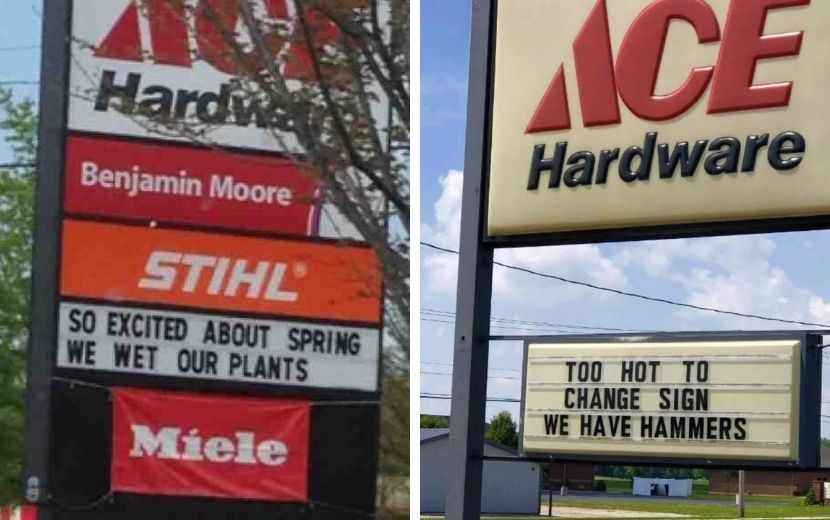
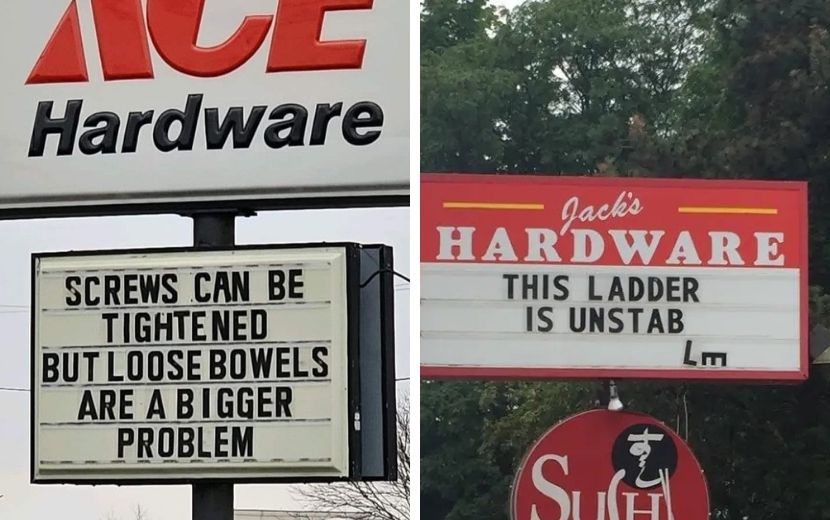
Examples ranged from funny billboard concepts like “Get Screws” to real-world ads like an HVAC company using “Your wife is hot!” to stop people in their tracks.
You’re not competing with other hardware stores. You’re competing with everything else fighting for attention.
And “perfect” usually loses.
Scroll down for funny billboard ideas for your hardware store!
Takeaway #2: If You Can’t Design It Perfectly, Make It Personal
Once you get past trying to make everything look perfect, a lot of the pressure around marketing starts to go away.
One of the most practical takeaways from this group was simple:
You don’t need to be a graphic designer to create content that works.
In fact, some of the best-performing ideas leaned into that reality:
- Posting a basic product screenshot
- Using quick, unpolished visuals
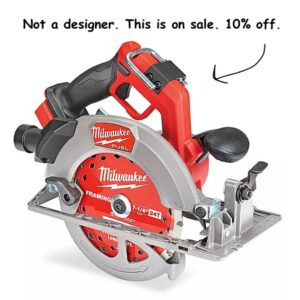
- Even joking about it with something like “I’m not a graphic designer, but please buy this.”
That kind of honesty stands out because it feels real.
From there, the conversation naturally shifted to what actually makes people engage. And it wasn’t design, it was people.
Stores that featured team members, used real photos, and made their content feel personal saw stronger engagement because it felt local and familiar.
You don’t need better design tools or more time to make content.
You just need to show up as a real store, with real people, doing real work.
That’s what customers actually connect with.
Takeaway #3: 20% of Your Signage Content Should Be Local (Your Advantage Over Home Depot or Lowe’s)
One of the simplest reminders from the group:
At least 20% of your content should be local.
That can look like:
- Local team shoutouts
- Community events
- Announcing Girl Scout cookies in-store
- Anything tied to families in your area
Because at the end of the day, that’s what independent hardware stores have that Home Depot or Lowe’s doesn’t.
It’s also the kind of content that people actually care about and engage with.
Helpful Resources for Marketers
- Funny Billboard Signs for Hardware Stores:
- A sales-focused ad/social post creative idea for non-designers in charge of marketing:
Know another hardware store that would benefit from these insights? Share this recap with them!
Owner/General Manager Mastermind Takeaways:
Takeaway #1: You Don’t Need More Data. You Need the Right Data at the Right Time
There was a lot of discussion around reporting, and one thing became clear quickly: There’s no shortage of data in a hardware store.
Between POS reports, inventory systems, vendor dashboards, and accounting tools, the challenge isn’t finding information. It’s knowing what actually matters and when to look at it.
One innovator shared that they check:
- Daily sales vs. last year
- Month-to-date and year-to-date performance
- Inventory gaps and overstock reports
…but also admitted that without consistent financial reporting, it’s easy to fall into a “gut feel” approach instead of structured planning.
Another key point: Looking at the wrong metric at the wrong time can lead to bad decisions.
For example, reacting to labor in a slow month like January without zooming out to the full year can cause problems when things pick back up in spring.
More data doesn’t make better decisions.
The right few metrics, looked at consistently and in the right context, do.
Takeaway #2: Ask Your Team “What Do You Think?”
One of the more subtle but powerful leadership themes in this session was knowing when not to step in.
Instead of immediately solving problems for the team, Innovators talked about creating space for them to figure it out themselves.
That can look like:
- Asking them what they think should happen
- Letting them try their approach
- Revisiting it together after
It’s not always faster. In fact, it’s usually slower in the moment.
But it builds something more valuable long term: Ownership.
If you always solve the problem for them, they never learn how to. If you give them space to figure it out, they start to build confidence, accountability, and better decision-making over time.
And hey, this might also work with parenting (be advised, results may vary, and hardware stores are often more predictable than children)!
Know another hardware store that would benefit from these insights? Share this recap with them!
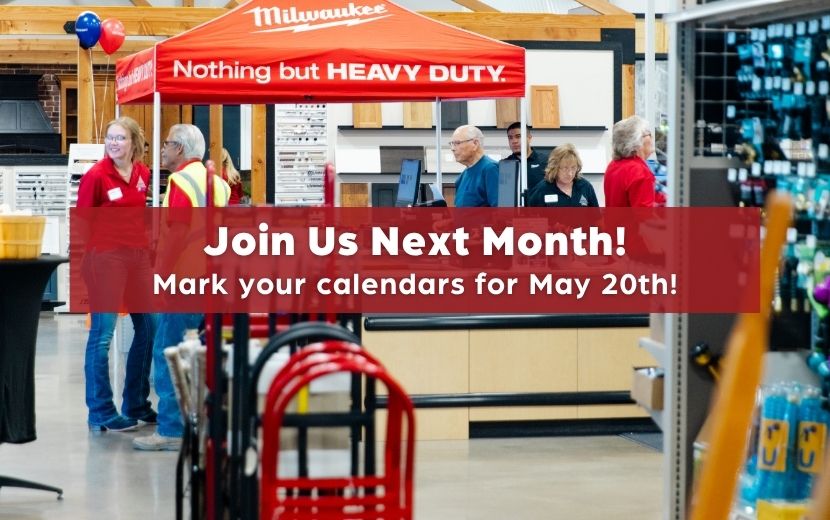
Join Us On May 20th for Our Next Mastermind
In May, we’re focusing on where B2B opportunities are being missed in-store and how to better structure your store, content, and team to capture more of them.
B2B Mastermind
Where Are We Missing B2B Opportunities In-Store?
Marketing Mastermind
In-Store Content Ideas that Can Help Capture More B2B Sales
Owners / GMs Mastermind
Structuring Your Store to Hit the Right B2B Revenue Mix
Are You On Board?
Does the idea of a monthly meet-up with other retail hardware stores sound valuable? Would you like to share resources, ask questions, and participate with your peers on-demand through an exclusive Slack channel?
Email us at hello@hardwareinnovators.com to get access to the Slack Channel! The best part? It’s 100% free and puts you in touch with hardware store general managers, marketers, and B2B reps to ask questions and get immediate feedback from what worked at other hardware stores!